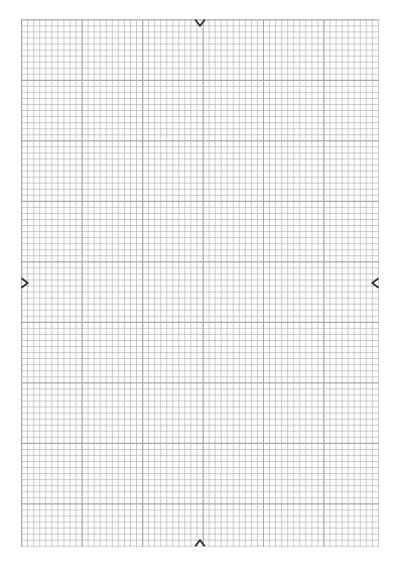
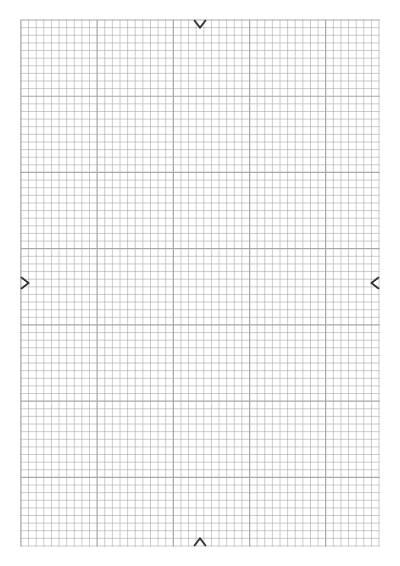
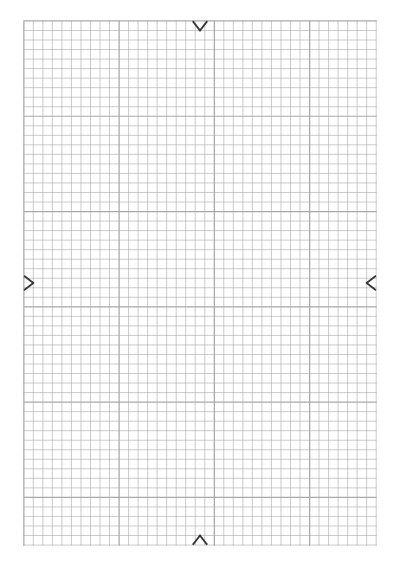
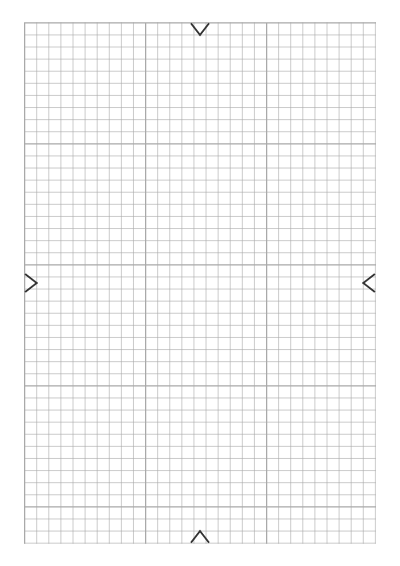
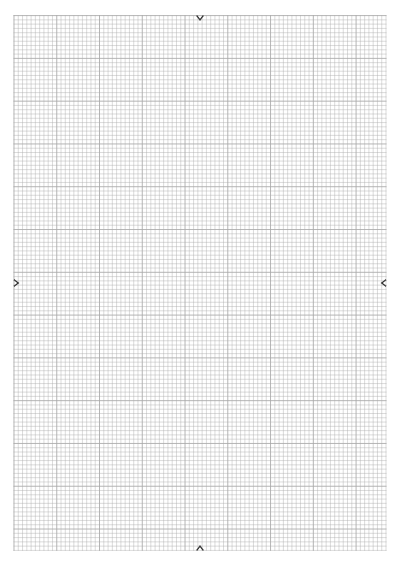
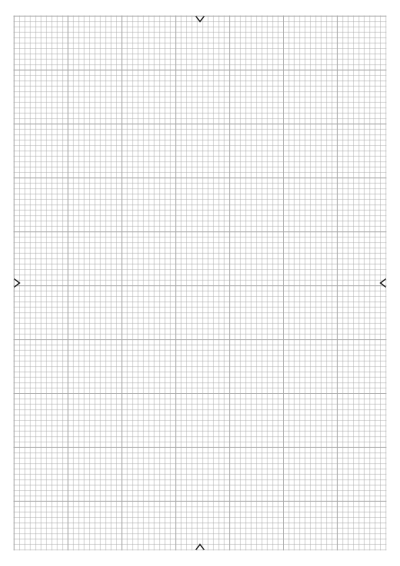
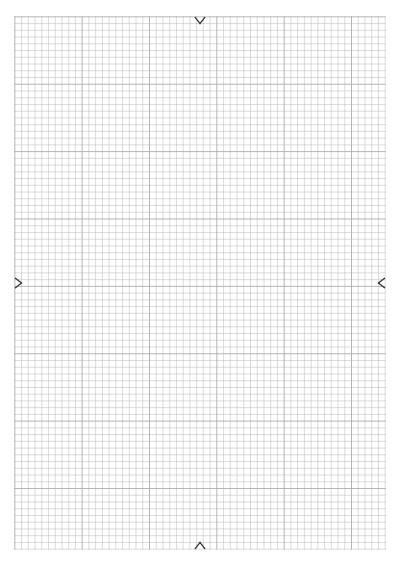
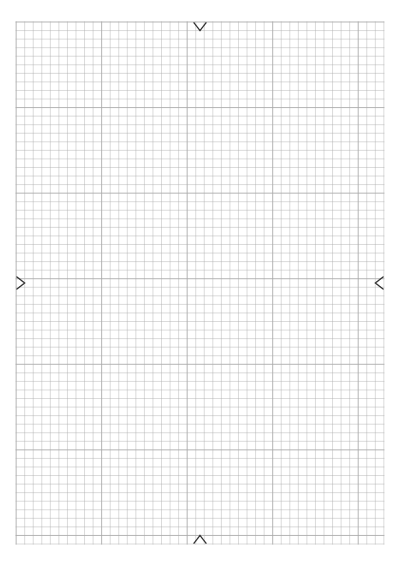
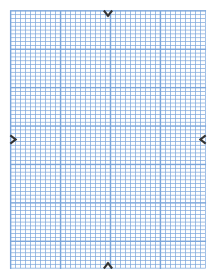
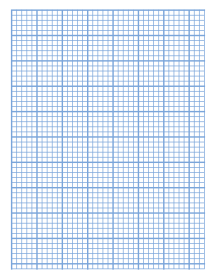
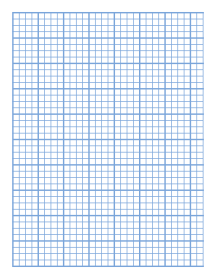
Why a bold line every 10 squares?
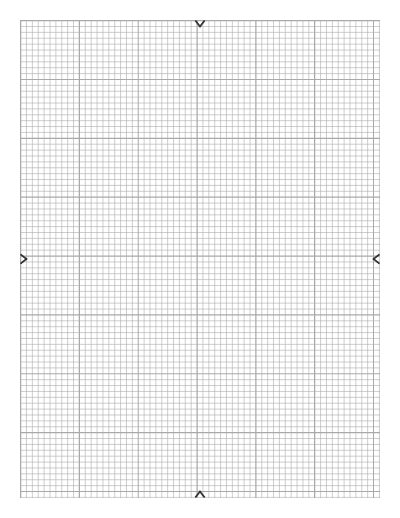
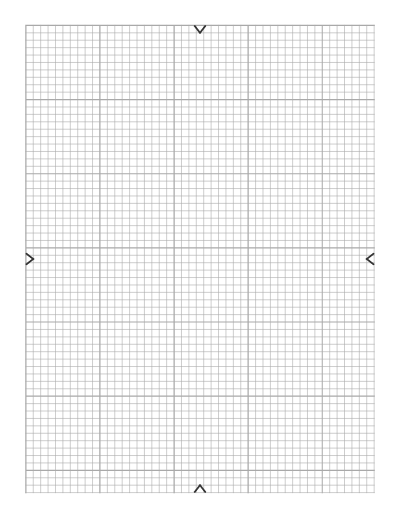
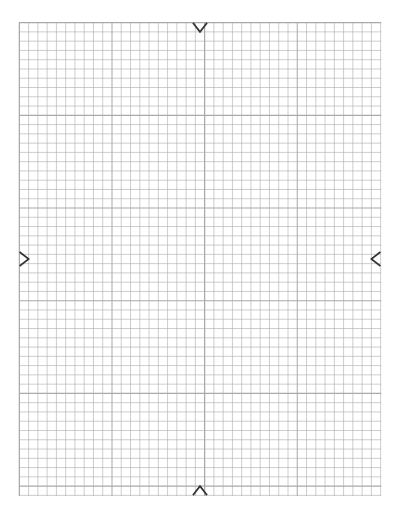
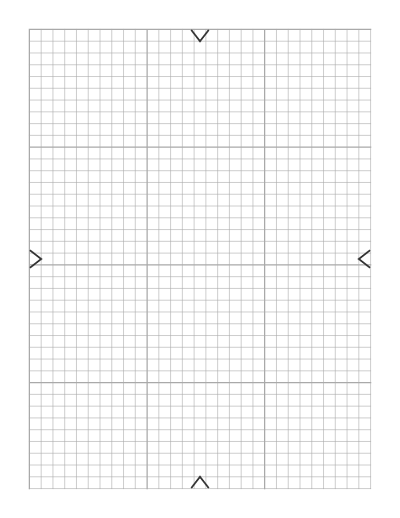
Cross stitch is worked by counting, and counting is where mistakes creep in. A bolder line after every 10 squares splits a chart into blocks you can count at a glance, the same way stitchers count 10 stitches at a time on the fabric. You can change the interval under Darker line every, or switch it off for a plain grid.
Finding the centre of your chart
Most cross stitch patterns are stitched outwards from the centre, which keeps the design evenly placed on the fabric. Leave Centre marks ticked and the grid is drawn with an odd number of squares across and down, so there is a single centre square. Arrows on the four edges point to the middle column and middle row. Fold your fabric in half both ways to find its centre, match it to the arrow crossing on your chart, and begin there.
From fabric count to finished size
On Aida cloth, the count is the number of stitches per inch. A higher count means smaller stitches, so the same chart stitches up smaller. The squares on your printed chart do not need to match the fabric, because one square always means one stitch. Use this table to work out how big a chart will be on the cloth.
| Aida count | Stitches per inch | 100 stitches wide is about |
|---|---|---|
| 11 count | 11 | 9.1 in (23.1 cm) |
| 14 count | 14 | 7.1 in (18.1 cm) |
| 16 count | 16 | 6.3 in (15.9 cm) |
| 18 count | 18 | 5.6 in (14.1 cm) |
To find the size of your own design, divide its stitch width by the count. For example, 140 stitches on 14 count is 10 inches. Add a few inches of spare cloth on every side for framing.
Charting tips
- Pick symbols, not shading: give each thread colour its own symbol so the chart still reads after copying or printing in black and white.
- Use larger squares for detail: choose 1/4 in squares if you want room for symbols, or 1/8 in to fit a bigger pattern on one page.
- Draw lightly: the grid is a light gray so pencil marks and symbols stand out.
Working with wool instead of floss? For stitches that are wider than tall, use knitting graph paper, which sets cell shape from your gauge. For a quick layout without a stitch count, ordinary 5 mm graph paper works.
Printing your chart
Print at 100% or Actual size, never “Fit to page”, so the squares stay evenly sized and a printed 10-square block is the same width everywhere on the page. If your printer scales pages, follow the print at actual size guide.
Frequently asked questions
How big is a 100-stitch pattern on 14-count Aida?
About 7.1 inches (18.1 cm) wide. Divide the number of stitches by the count: 100 ÷ 14 is roughly 7.14 inches.
Should I print the grid at actual size?
Yes, if you want the squares evenly spaced and easy to measure. The size of a chart square does not need to match the fabric, so you may also enlarge the squares to make symbols easier to draw.
Can I chart half stitches or backstitch on this paper?
You can draw them by hand. Use a diagonal line inside a square for a half stitch, and draw backstitch along the grid lines. The sheet gives you the grid only and does not print symbols.
Why does the grid have an odd number of squares?
So the chart has a true centre square. With an even count, the centre falls on a line between squares, which makes it harder to match to the centre of your fabric.