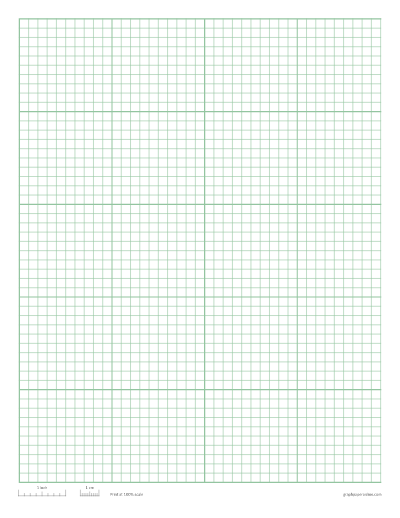
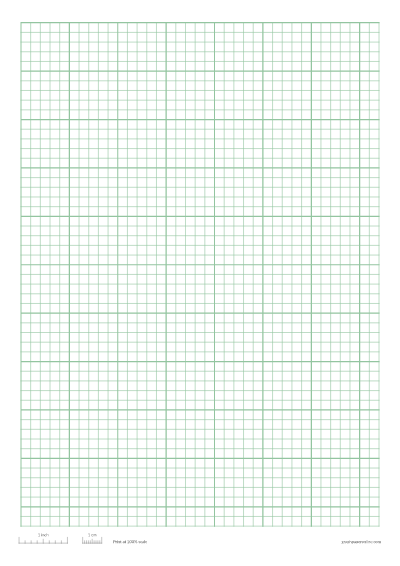
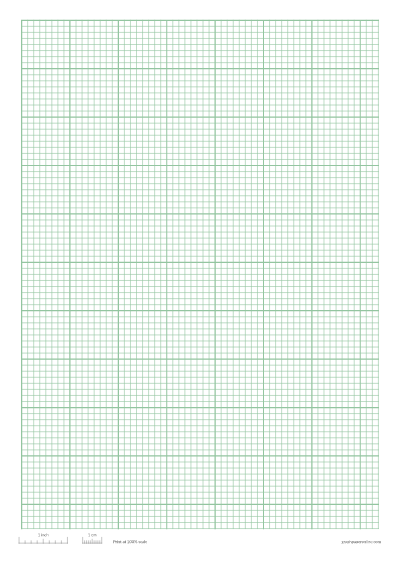
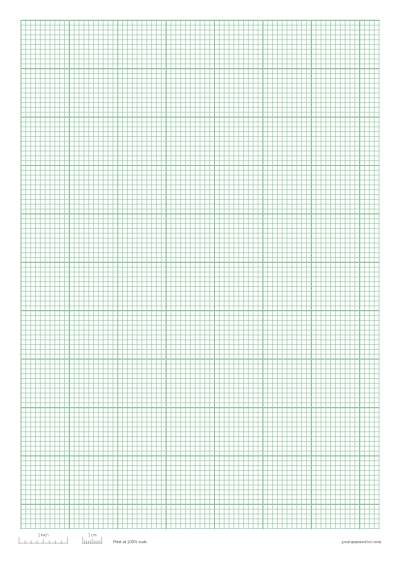
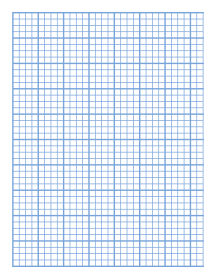
What makes it engineering paper?
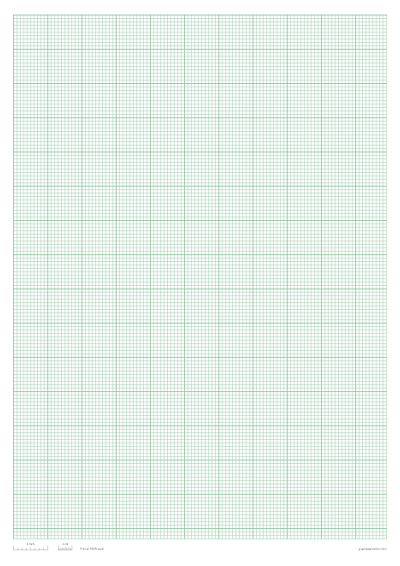
Engineering paper is graph paper with two habits that set it apart from the usual maths-book grid. The squares are sized to the inch, most often 5 to the inch (each square 0.2 in), and a darker line marks every inch so you can count distances at a glance. Traditional engineering computation pads also print the grid on the back of the sheet, so writing on the front stays clean. That pale green, five-to-the-inch sheet is the one many students and engineers picture when they ask for engineering paper.
Which squares per inch should I choose?
- 5 per inch (default): the classic sheet. Roomy enough for handwriting on every second line, fine enough for neat sketches.
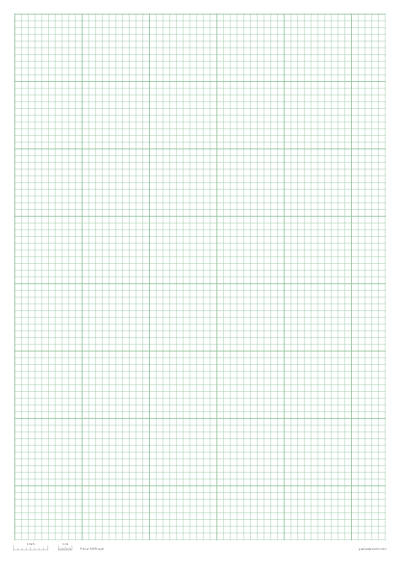
- 8 per inch: tighter, with 8 squares between each dark line. Good for small drawings.
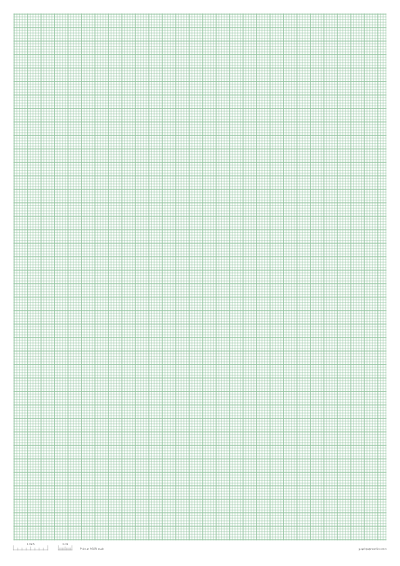
- 10 per inch: the finest inch grid, close to the 2.5 mm squares of millimetre paper. Useful for plots that need precision.
Switching the grid size also moves the darker line, so the heavy lines always fall on whole inches. Prefer a different spacing? Open More options and type your own size.
How to format and fill out engineering paper
Instructors and employers differ, so follow the format you were given. A common approach is to write your name, the date and the problem number at the top of each sheet, number the pages, and work one problem at a time. Keep sketches in the squares, put calculations in tidy lines, and box final answers. Tick Name and date line to print a header for that information.
Writing on the back, grid on the front
Printing the grid on one side and writing on the other copies the traditional look: on ordinary copy paper the lines show through faintly while your pencil work stays crisp. For writing on the same side, pick the Light line weight so the grid stays behind your handwriting.
Metric engineering paper
Outside the US, engineering sketches are often drawn on 2 mm or 5 mm squares. Choose 2 mm for a heavier line every 1 cm or 5 mm for one every 5 cm. Using A4 sheets? A4 graph paper shows how many squares fit on the page.
Printing at true size
Inch squares only help if they are really an inch. Print at 100% or Actual size, never “Fit to page”, then check the ruler at the bottom of the sheet. The print at actual size guide covers each browser. If you need bigger squares for planning, try 1 inch graph paper, or add numbered axes with coordinate plane graph paper.
Frequently asked questions
Is engineering paper the same as graph paper?
Almost. Both are square grids, but engineering paper is sized to the inch, usually 5 squares per inch, and marks each inch with a darker line. Ordinary graph paper often uses 5 mm or ¼ inch squares with no such marking.
How many squares per inch is engineering paper?
It varies by brand. Five squares per inch is the most familiar, while 8 and 10 per inch also exist. This page offers all three, so choose the one your course or project asks for.
Why is engineering paper green?
The pale green grid is traditional on engineering pads. It stays visible on the page but fades in photocopies and scans, so your pencil work stands out. If you prefer, switch the line colour to gray, blue or black.
Can I use it for engineering drawings?
Yes, for sketches, calculations and plots. For formal drawings, follow the sheet size and layout your standard or instructor requires.