What is 1/4 inch graph paper?
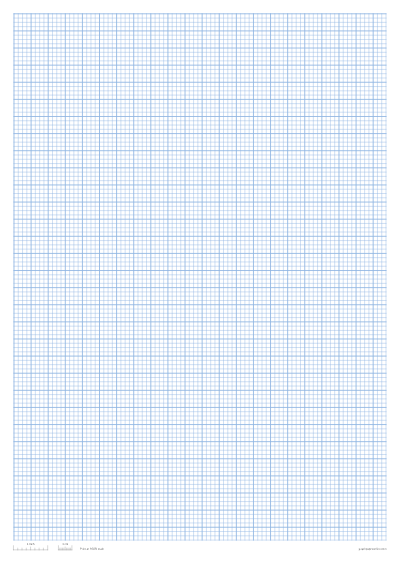
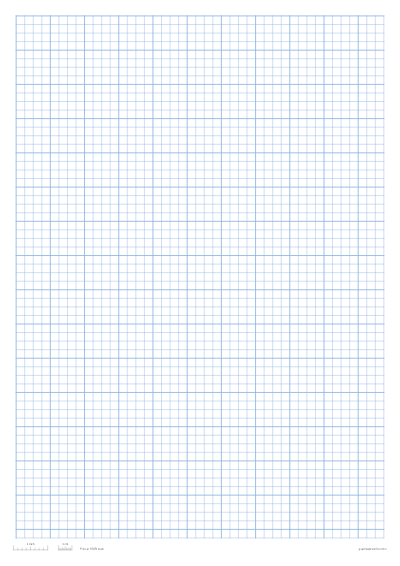
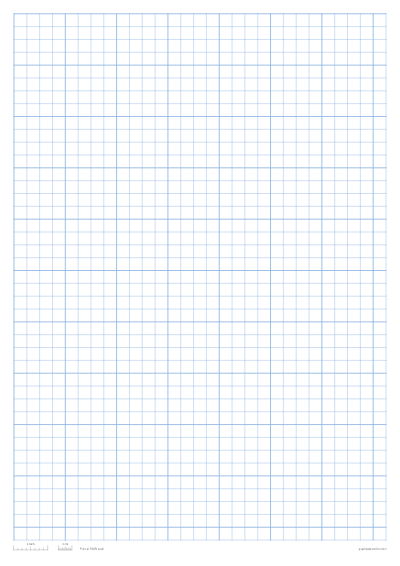
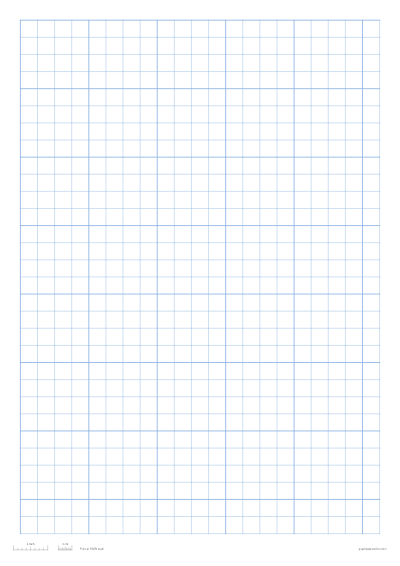
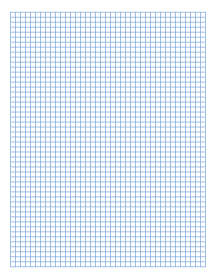
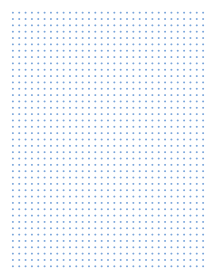
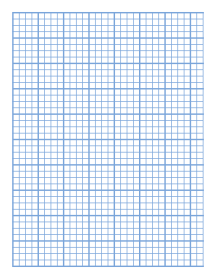
1/4 inch graph paper, also called quarter-inch graph paper, is a grid of squares that are each a quarter of an inch (6.35 mm) wide. That gives 4 squares to the inch, so counting is easy: every fourth line is a whole inch. It is the most familiar graph paper size in US schools, and the size most worksheets and textbooks assume when they say “use graph paper”.
A darker line every inch
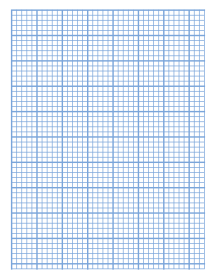
This sheet starts with Darker line every 4 switched on, so the heavy lines fall exactly on whole inches. Measuring becomes quick: four squares across is one inch, eight is two. If you prefer a plain grid, choose Off under Darker line every; for a heavy line every half inch, choose 2.
How many squares fit on the page?
With 10 mm margins and the size check ruler switched off, a full sheet holds about this many squares:
| Paper | Squares across × down |
|---|---|
| US Letter (8.5 × 11 in) | 30 × 40 |
| A4 (210 × 297 mm) | 29 × 43 |
The grid always uses whole squares and is centred on the page, so you never print a half square at the edge. Need a bigger or smaller grid? Pick 1/8 in, 3/8 in or 1/2 in, or type any size under More options.
Scale drawings: one square is one foot
A common architectural scale is 1/4 inch to 1 foot. On this paper that means one square equals one foot, and every dark line is four feet. It is a quick way to sketch a floor plan, a garden or a room layout and keep the proportions right. A 12 by 15 foot room becomes a rectangle of 12 by 15 squares.
1/4 inch or 5 mm graph paper?
A 1/4 inch square is 6.35 mm, about 27% larger than a 5 mm square. They are close enough that people use them interchangeably, but a sheet printed for one will not line up with the other. Choose 1/4 inch for US school work and inch-based plans, and 5 mm graph paper where your textbook or ruler is metric. If you want one heavy line per inch on a finer grid, see engineering paper.
Printing at true size
Printing errors show up fast on a 1/4 inch grid. If the print dialog shrinks the page to fit, 40 squares become noticeably shorter than 10 inches. Print at 100% or Actual size, never “Fit to page”, then hold a ruler against the 1 inch mark at the bottom of the sheet. The print at actual size guide covers each browser. For bigger squares on the same page, try 1 inch graph paper. Want a file to keep or a class set? See graph paper PDF.
Frequently asked questions
How many squares per inch is 1/4 inch graph paper?
Four. Each square is 1/4 inch wide, so four of them make one inch.
Is quad-ruled paper the same as 1/4 inch graph paper?
“Quad ruled” means paper ruled in squares. Quarter-inch squares, four to the inch, are a common size, but quad-ruled paper is also sold with other grid sizes, so check the spacing printed on the pad.
Can I get 1/4 inch graph paper with numbered axes?
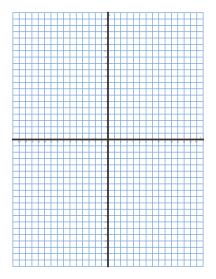
Yes. Open coordinate plane graph paper and choose 1/4 in. The page prints x and y axes through the middle with numbers along the lines.
Will this print correctly on A4 paper?
Yes. Switch Paper to A4 and the squares stay exactly 1/4 inch wide; only the number of squares across and down changes.