
What is handwriting paper?
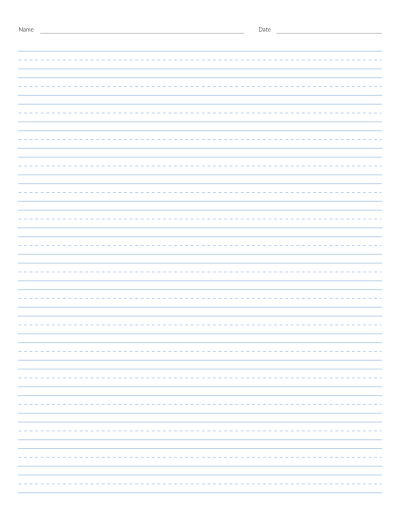
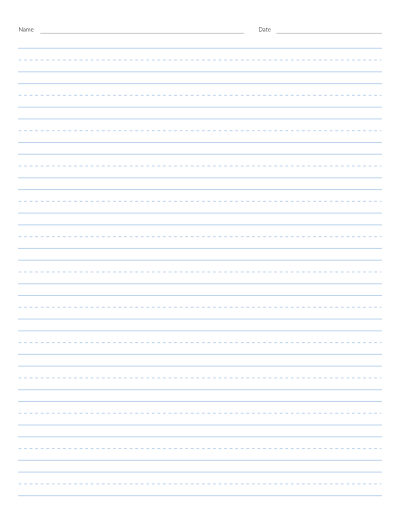
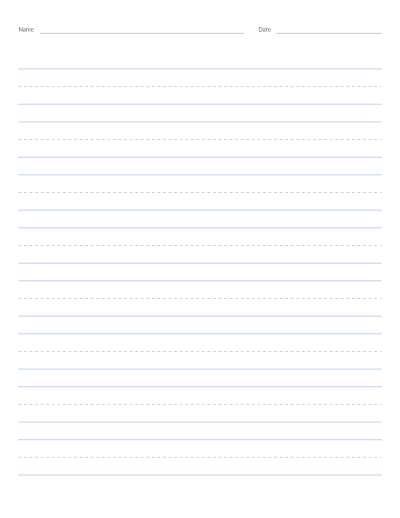
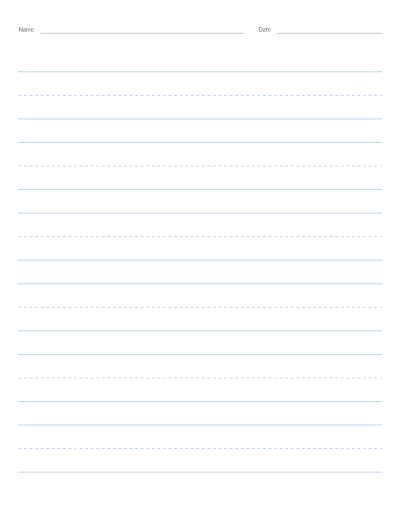
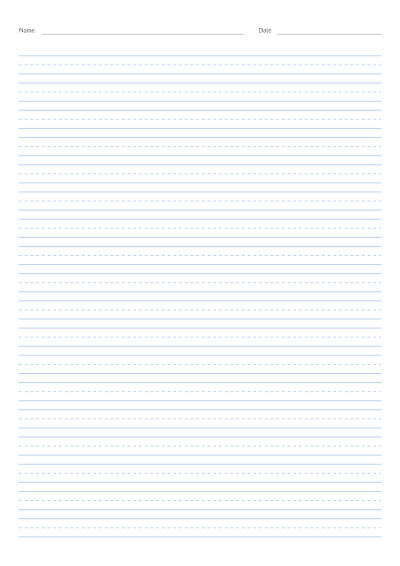
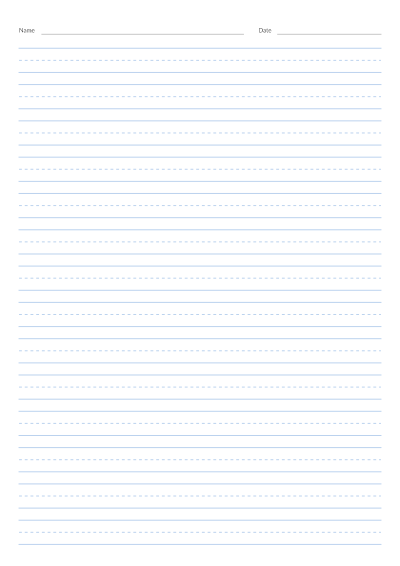
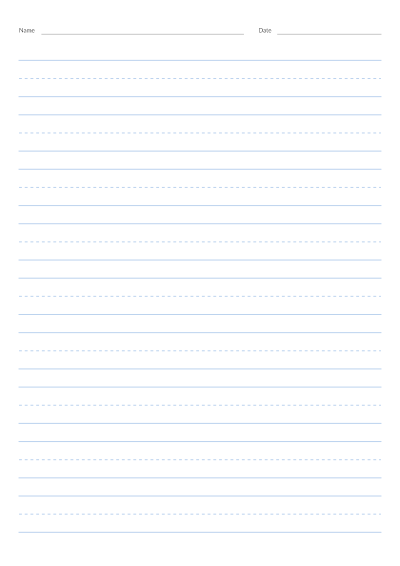
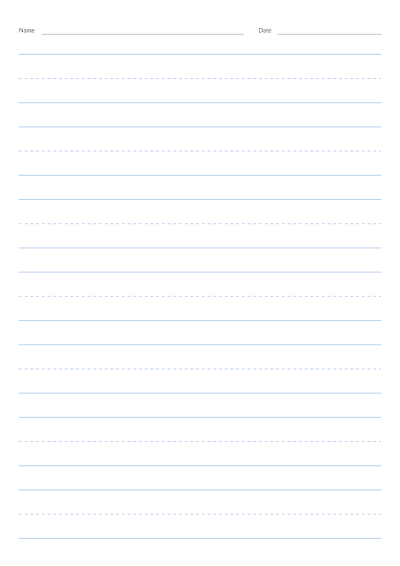
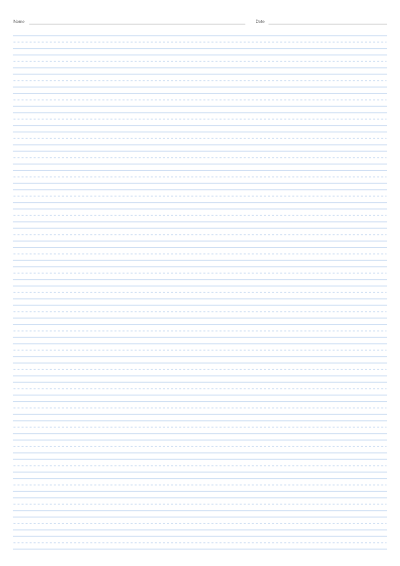
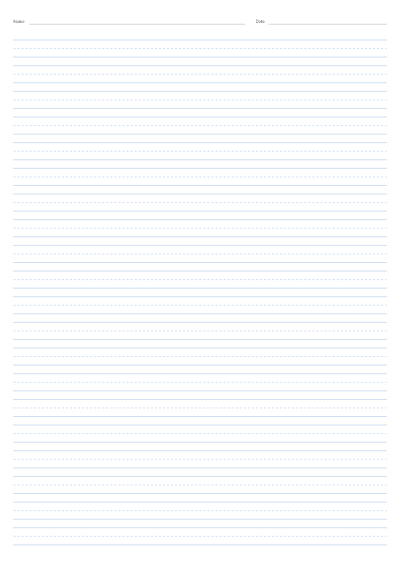
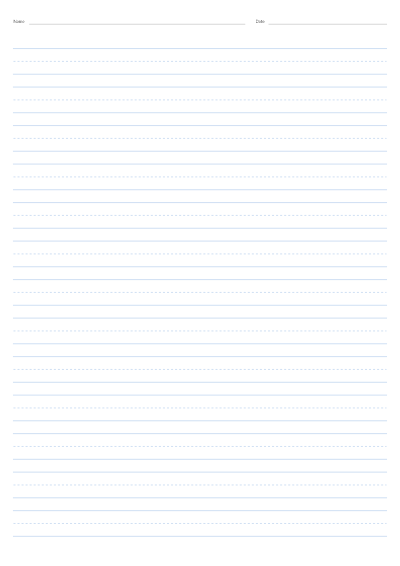
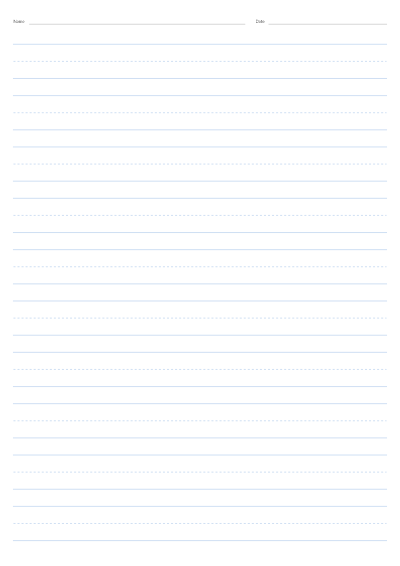
Handwriting paper is lined paper made for learning to form letters. Each writing space has three guides: a solid top line, a dashed midline and a solid baseline. Capital letters and tall letters such as b, d, h and l reach the top line. Small letters such as a, c, e and o fill the space between the midline and the baseline. Letters with tails, such as g, j, p and y, drop below the baseline, so each row is followed by a gap that leaves room for them.
If you only need plain ruled lines for essays or notes, use lined paper instead; it offers wide, college and narrow ruling without the dashed midline.
Choosing a line height by age
Younger children write bigger, so the first decision is the height of each writing space:
- 1 inch and 3/4 inch: large spaces for kindergarten handwriting paper and first attempts at forming letters.
- 1/2 inch: a common step for early elementary writing as control improves.
- 3/8 inch: smaller spaces for older children and adults who want tidy printing.
A good habit is to start large and move down a size once letters sit neatly between the lines. Need another size? Open More options and type your own height.
Printing or cursive: slant guides
Leave Slant guides off for printed letters. For cursive, turn them on: parallel guides lean to the right at about 20° from upright and help keep every letter at the same angle. The slant lines run between the top line and the baseline of each row and repeat across the page.
Make a class set of practice sheets
Teachers and parents often need several identical sheets. Tick Name and date line to print a header on every page, then raise Pages in PDF under More options and save one PDF for the whole class. The sheet is drawn at true size, so print at 100% or Actual size, never “Fit to page”. The print at actual size guide shows how in each browser.
Handwriting paper for other uses
The same layout suits calligraphy and hand-lettering practice, name writing and copying out spelling words. For lettering with no lines at all, try dot grid paper, and for taking lecture notes use a Cornell notes template.
Frequently asked questions
What is the dashed line in the middle for?
It marks the height of small letters. Letters such as a, c and e stop at the dashed midline, while tall letters go up to the top line. Having both guides helps children see the size difference between letters.
What size lines should I use for kindergarten?
Large spaces are easiest for beginners, so start with 1 inch or 3/4 inch and move to a smaller size as control improves. There is no single rule, and schools differ, so follow your teacher’s sheet if you have one.
Is this the same as primary ruled paper?
The layout is similar: a solid baseline with a dashed midline. Sizes vary from brand to brand, so use the line height options here to match the sheet you need.
Can I print cursive practice sheets?
Yes, with the slant guides turned on. The sheet provides lines and slant guides only. It does not print letter models to trace.